16 Jul 2026
Payment Networks Driving Integrated Experiences Across Casino Verticals in Loyalty Tiers
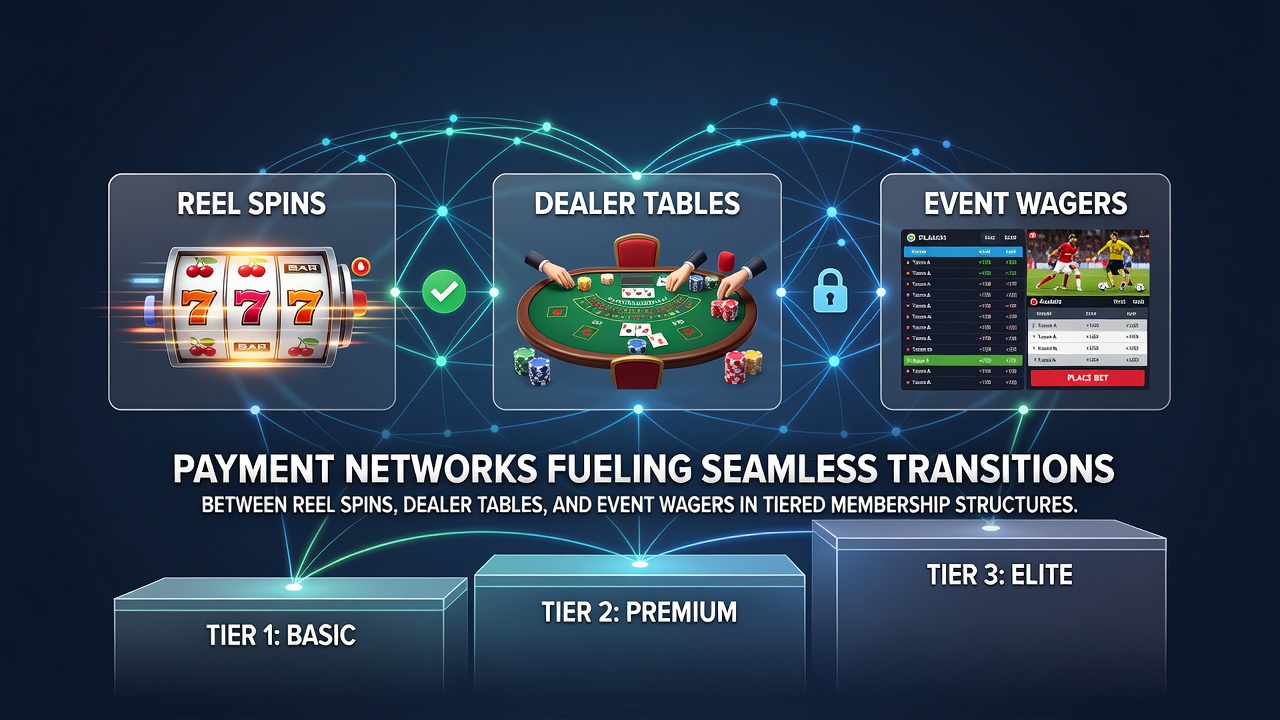
Payment networks have become central to how players move between different gaming formats while maintaining continuity in their accounts and rewards, and these systems support real-time fund transfers that link reel-based games, live dealer environments, and sports event wagering without requiring separate balance management for each activity. Observers note that integrated processing allows funds deposited once to flow across categories through a single interface, and this setup proves especially useful inside tiered membership programs where higher levels unlock reduced fees along with priority settlement times. Data from industry reports shows that operators using advanced network protocols record higher session continuity rates because players avoid the friction of repeated deposits or withdrawals when switching game types.
Core Mechanisms Behind Cross-Format Fund Movement
Modern payment processors employ standardized APIs that connect directly to casino management platforms, enabling instant balance updates when a player finishes a slot session and enters a live dealer room or places a wager on an upcoming sports event. These networks handle currency conversion and risk checks in the background so the transition remains invisible to the end user, while tiered membership structures layer additional features on top such as expedited verification for platinum-level accounts or automatic reward point allocation across all verticals. Researchers at the University of Nevada, Reno have documented how these connections reduce transaction latency by up to 70 percent compared with earlier batch-processing methods, and the findings appear in their 2025 gaming technology review.
Tiered Membership Frameworks and Payment Advantages
Casino loyalty programs typically divide participants into entry, mid, and elite tiers, each carrying distinct payment privileges that encourage sustained activity across multiple game formats. Entry-level members receive standard processing speeds, whereas mid-tier participants gain access to lower withdrawal minimums and elite members often enjoy complimentary instant transfers plus dedicated account managers who monitor cross-game spending patterns. This structure creates incentive alignment because points earned on slots can immediately fund table game buy-ins or sports wagers, and the payment network records every movement to calculate unified reward multipliers. Figures released by the American Gaming Association indicate that operators offering such unified ledgers see a 25 percent increase in multi-vertical engagement among tiered members.
Technical Infrastructure Supporting July 2026 Updates
By July 2026 several major networks rolled out enhanced tokenization standards that further secure cross-game transfers while maintaining compliance with varying regional requirements in North America and the European Union. These upgrades allow membership tiers to apply dynamic spending limits that adjust automatically when funds move from one category to another, preventing overextension while preserving player momentum. Experts at the European Gaming and Betting Association have tracked adoption rates and report that systems incorporating these July protocols demonstrate improved reconciliation accuracy across operator databases. The changes also integrate with existing loyalty engines so that bonus eligibility criteria remain consistent regardless of which game type receives the transferred balance.

Practical Examples of Seamless Player Journeys
Consider a mid-tier member who deposits funds through a digital wallet and begins with progressive reel games, then shifts remaining credits to a live blackjack table once a progressive jackpot round concludes. The payment network registers the move in milliseconds and applies any applicable tier bonus automatically, after which the same balance can fund a live sports wager without additional authentication steps. Observers have recorded these sequences in operational data from multiple jurisdictions, noting that the absence of repeated identity checks keeps participation rates elevated throughout the session. Such patterns emerge consistently in programs where network infrastructure and membership rules operate as a single coordinated system rather than separate modules.
Regulatory and Operational Considerations
Payment networks must satisfy licensing conditions set by bodies such as the Nevada Gaming Control Board and the Australian Communications and Media Authority, which require transparent audit trails for every fund movement between game categories. These requirements become more manageable inside tiered structures because higher membership levels often include enhanced monitoring tools that flag unusual patterns across slots, tables, and event wagers simultaneously. Compliance teams use aggregated reports generated by the networks to demonstrate adherence without manual reconstruction of each transaction path, and this efficiency supports larger operational scales while preserving the fluid experience for members.
Conclusion
Payment networks continue to underpin the ability of tiered membership programs to deliver uninterrupted movement between reel spins, dealer tables, and event wagers by providing the technical backbone for instant, secure, and auditable transfers. The integration of these systems with loyalty frameworks produces measurable increases in cross-category activity, and ongoing protocol enhancements scheduled through 2026 promise further refinements to speed and security. Operators that align network capabilities with tier benefits position their programs to maintain consistent engagement across diverse gaming formats without introducing additional administrative layers for participants.