16 Jun 2026
Settlement Timelines Driving Loyalty Point Growth in Digital Gaming Formats
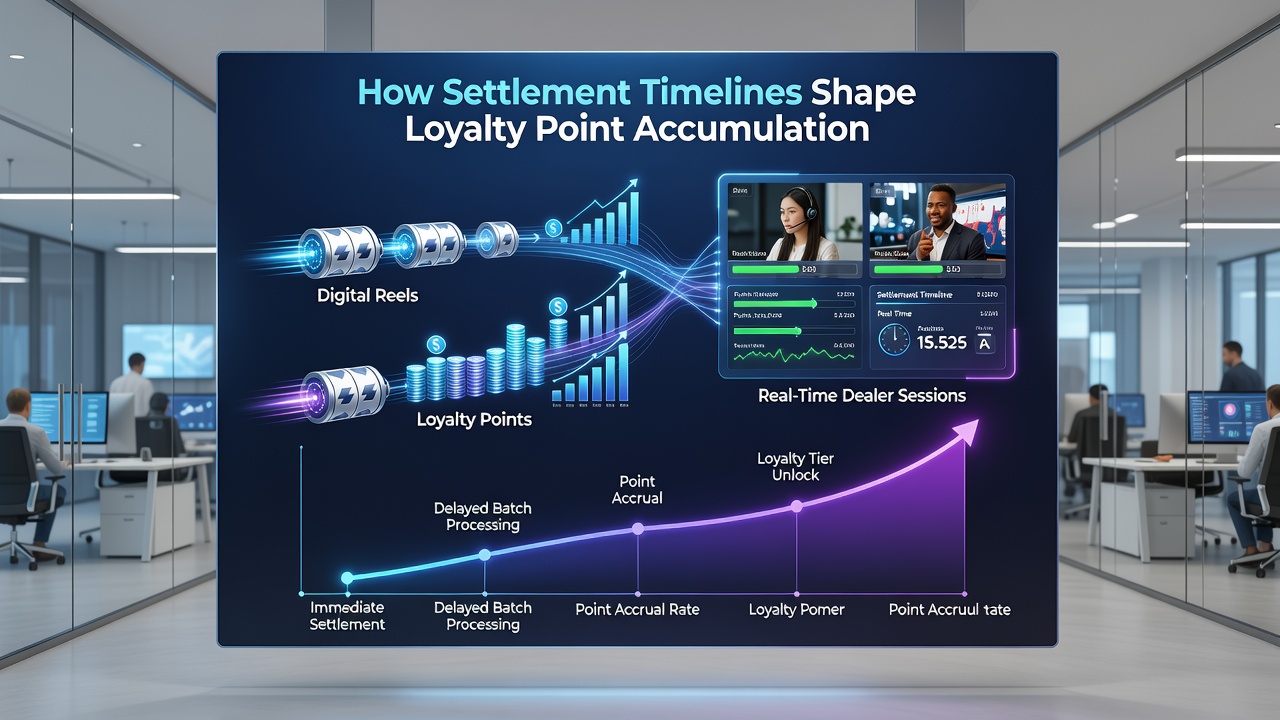
 Observers note that settlement timelines directly determine when loyalty points register across digital reels, real-time dealer sessions, and event-based wagers. Data from multiple gaming markets shows these periods range from seconds in automated slots to hours or days in live dealer outcomes and sports-style events. The timing affects how quickly players advance through tier structures because most programs credit points only after funds clear and results finalize. Digital reels operate on near-instant processing cycles. A spin resolves within moments, funds update immediately, and points accumulate once the outcome posts. Research from the American Gaming Association indicates operators in regulated U.S. states process over 90 percent of slot transactions in under five seconds during peak hours. This speed allows frequent players to stack points rapidly during extended sessions, which in turn accelerates access to bonus features tied to tier status. Yet delays occur when network verification or jackpot confirmations intervene, creating brief gaps that shift accumulation rates. Real-time dealer sessions introduce different variables. Cards, wheels, and dice generate results instantly, but settlement often waits for dealer verification or multi-player consensus. Figures reveal that live blackjack and roulette tables in European markets average 30 to 90 seconds between hand closure and point credit. Those who study these systems find that longer verification windows reduce the total points earned per hour compared with fully automated alternatives, because players cannot immediately reinvest winnings into new rounds that would generate additional rewards. Event-based wagers extend settlement further. Outcomes in sports or tournament-style bets may remain pending until an event concludes or disputes resolve. Reports from the Australian Institute of Criminology document average settlement periods of four to 48 hours for live sports markets, with occasional extensions during playoffs or weather interruptions. Loyalty programs typically withhold point allocation until official results lock in, which means players participating in multi-leg bets experience staggered credit dates that influence monthly tier calculations. Platforms adjust loyalty formulas to account for these differences. Some award partial points upon initial bet placement while reserving the balance for final settlement, a method that smooths accumulation curves across game types. Industry analyses show this hybrid approach increases retention because participants see steady progress even when certain wagers take longer to resolve. Others apply multipliers once settlement completes, rewarding patience with larger point bundles for event-based activity. June 2026 marks the rollout of updated transaction standards in several Canadian provinces, requiring operators to publish average settlement times per game category. Early compliance data indicates greater transparency has prompted loyalty program redesigns that factor settlement speed into point multipliers. Players who track these metrics often shift activity toward faster-settling digital reels during high-volume periods to maximize tier advancement before slower live or event wagers finalize.
  Cross-game promotions sometimes link settlement requirements. A single promotion might require completed settlements across all three categories before bonus points release. Data indicates these bundled offers produce higher overall engagement because participants balance quick digital reel sessions with longer live and event bets to meet combined thresholds. Operators track completion rates closely, adjusting future campaigns based on observed settlement patterns. Payment method choice further modulates timelines. E-wallet transfers often settle faster than card or bank options, directly speeding loyalty credit in every game type. Studies conducted by the University of Nevada, Las Vegas gaming research center demonstrate that players using instant-withdrawal methods accumulate 15 to 25 percent more points monthly than those relying on traditional banking rails, purely due to reduced processing intervals. Software platforms now embed real-time settlement dashboards within loyalty interfaces. These displays show pending points by category, estimated credit dates, and projected tier impact. Observers report that such visibility reduces player frustration during extended event-based waits and encourages continued activity in digital reels while awaiting live dealer confirmations. The interplay between settlement speed and point accumulation continues to evolve as regulators and operators refine transaction protocols. Patterns observed through 2026 suggest that programs incorporating variable multipliers based on settlement duration will become standard, allowing fairer reward distribution across digital reels, real-time dealer sessions, and event-based wagers alike. Conclusion
Settlement timelines remain a core mechanic shaping loyalty point accumulation. Faster digital reel cycles support rapid stacking, live dealer verifications introduce moderate delays, and event-based wagers extend the process significantly. Operators respond with adjusted formulas, transparent reporting, and integrated tools that help participants manage these differences. As standards advance, the relationship between settlement speed and reward progress will stay central to how loyalty systems function across gaming formats.
Cross-game promotions sometimes link settlement requirements. A single promotion might require completed settlements across all three categories before bonus points release. Data indicates these bundled offers produce higher overall engagement because participants balance quick digital reel sessions with longer live and event bets to meet combined thresholds. Operators track completion rates closely, adjusting future campaigns based on observed settlement patterns. Payment method choice further modulates timelines. E-wallet transfers often settle faster than card or bank options, directly speeding loyalty credit in every game type. Studies conducted by the University of Nevada, Las Vegas gaming research center demonstrate that players using instant-withdrawal methods accumulate 15 to 25 percent more points monthly than those relying on traditional banking rails, purely due to reduced processing intervals. Software platforms now embed real-time settlement dashboards within loyalty interfaces. These displays show pending points by category, estimated credit dates, and projected tier impact. Observers report that such visibility reduces player frustration during extended event-based waits and encourages continued activity in digital reels while awaiting live dealer confirmations. The interplay between settlement speed and point accumulation continues to evolve as regulators and operators refine transaction protocols. Patterns observed through 2026 suggest that programs incorporating variable multipliers based on settlement duration will become standard, allowing fairer reward distribution across digital reels, real-time dealer sessions, and event-based wagers alike. Conclusion
Settlement timelines remain a core mechanic shaping loyalty point accumulation. Faster digital reel cycles support rapid stacking, live dealer verifications introduce moderate delays, and event-based wagers extend the process significantly. Operators respond with adjusted formulas, transparent reporting, and integrated tools that help participants manage these differences. As standards advance, the relationship between settlement speed and reward progress will stay central to how loyalty systems function across gaming formats.
Observers note that settlement timelines directly determine when loyalty points register across digital reels, real-time dealer sessions, and event-based wagers. Data from multiple gaming markets shows these periods range from seconds in automated slots to hours or days in live dealer outcomes and sports-style events. The timing affects how quickly players advance through tier structures because most programs credit points only after funds clear and results finalize. Digital reels operate on near-instant processing cycles. A spin resolves within moments, funds update immediately, and points accumulate once the outcome posts. Research from the American Gaming Association indicates operators in regulated U.S. states process over 90 percent of slot transactions in under five seconds during peak hours. This speed allows frequent players to stack points rapidly during extended sessions, which in turn accelerates access to bonus features tied to tier status. Yet delays occur when network verification or jackpot confirmations intervene, creating brief gaps that shift accumulation rates. Real-time dealer sessions introduce different variables. Cards, wheels, and dice generate results instantly, but settlement often waits for dealer verification or multi-player consensus. Figures reveal that live blackjack and roulette tables in European markets average 30 to 90 seconds between hand closure and point credit. Those who study these systems find that longer verification windows reduce the total points earned per hour compared with fully automated alternatives, because players cannot immediately reinvest winnings into new rounds that would generate additional rewards. Event-based wagers extend settlement further. Outcomes in sports or tournament-style bets may remain pending until an event concludes or disputes resolve. Reports from the Australian Institute of Criminology document average settlement periods of four to 48 hours for live sports markets, with occasional extensions during playoffs or weather interruptions. Loyalty programs typically withhold point allocation until official results lock in, which means players participating in multi-leg bets experience staggered credit dates that influence monthly tier calculations. Platforms adjust loyalty formulas to account for these differences. Some award partial points upon initial bet placement while reserving the balance for final settlement, a method that smooths accumulation curves across game types. Industry analyses show this hybrid approach increases retention because participants see steady progress even when certain wagers take longer to resolve. Others apply multipliers once settlement completes, rewarding patience with larger point bundles for event-based activity. June 2026 marks the rollout of updated transaction standards in several Canadian provinces, requiring operators to publish average settlement times per game category. Early compliance data indicates greater transparency has prompted loyalty program redesigns that factor settlement speed into point multipliers. Players who track these metrics often shift activity toward faster-settling digital reels during high-volume periods to maximize tier advancement before slower live or event wagers finalize.
Cross-game promotions sometimes link settlement requirements. A single promotion might require completed settlements across all three categories before bonus points release. Data indicates these bundled offers produce higher overall engagement because participants balance quick digital reel sessions with longer live and event bets to meet combined thresholds. Operators track completion rates closely, adjusting future campaigns based on observed settlement patterns. Payment method choice further modulates timelines. E-wallet transfers often settle faster than card or bank options, directly speeding loyalty credit in every game type. Studies conducted by the University of Nevada, Las Vegas gaming research center demonstrate that players using instant-withdrawal methods accumulate 15 to 25 percent more points monthly than those relying on traditional banking rails, purely due to reduced processing intervals. Software platforms now embed real-time settlement dashboards within loyalty interfaces. These displays show pending points by category, estimated credit dates, and projected tier impact. Observers report that such visibility reduces player frustration during extended event-based waits and encourages continued activity in digital reels while awaiting live dealer confirmations. The interplay between settlement speed and point accumulation continues to evolve as regulators and operators refine transaction protocols. Patterns observed through 2026 suggest that programs incorporating variable multipliers based on settlement duration will become standard, allowing fairer reward distribution across digital reels, real-time dealer sessions, and event-based wagers alike. Conclusion
Settlement timelines remain a core mechanic shaping loyalty point accumulation. Faster digital reel cycles support rapid stacking, live dealer verifications introduce moderate delays, and event-based wagers extend the process significantly. Operators respond with adjusted formulas, transparent reporting, and integrated tools that help participants manage these differences. As standards advance, the relationship between settlement speed and reward progress will stay central to how loyalty systems function across gaming formats.